
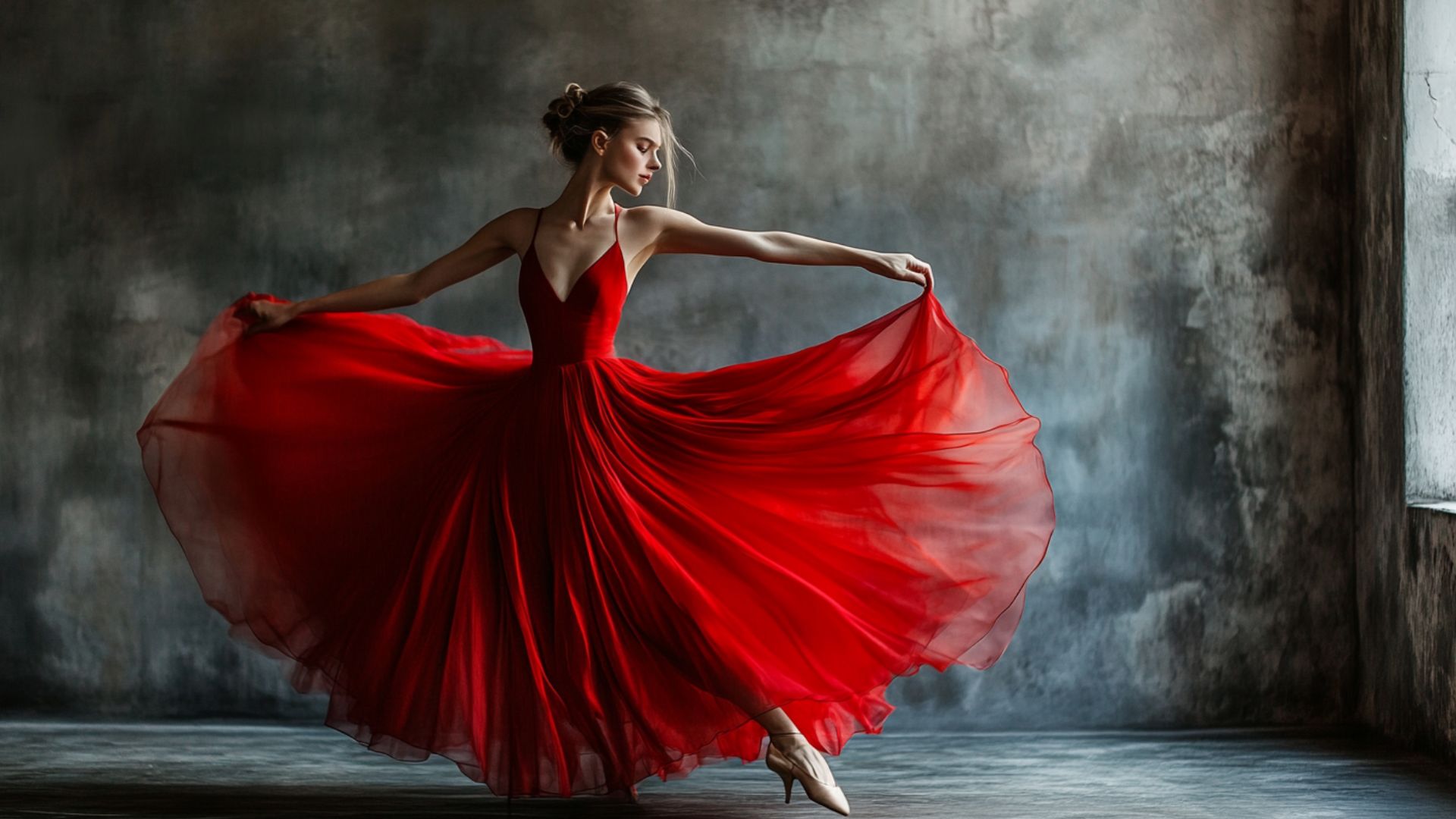
Can the right dress elevate your dance performance? Absolutely. For dancers, the perfect outfit is way more than just clothing – it becomes part of how you move and present yourself on stage.
The history of dance dresses shows just how important this connection is. Back in the 18th century, groundbreaking dancers like Marie Sallé ditched heavy court gowns for simpler tunics that let them actually move. Later on, the Romantic tutu came along – all those gauzy layers created that dreamy, floating look we still see in classical ballet today.
Finding your ideal dance dress means balancing how it looks with how it performs. A well-made dress supports your lines and works with your choreography, not against it. Plus, when you feel confident in what you’re wearing, it’s way easier to connect with your audience.
But here’s the thing – not all dancing dresses are the same. Practice and recital outfits focus on comfort over fancy details. Competition dresses, though? They’re built for high-pressure moments, using performance fabrics and serious bling like rhinestones to make you pop under those intense stage lights.
The wrong fit or fabric can mess with your movement or take away from your performance. So how do you find the perfect one? And how do you pick the right fabric, color, and accessories? Keep reading to find out!
Types of Dance Dresses for Every Style and Occasion
To pick the right costume, you first need to know what your dance style requires. Different styles require specific dresses for a dance that showcase particular movements and body lines.
Here’s a breakdown of the main dress styles:
- Ballroom (Standard). These features include long, flowing skirts, often made from chiffon or satin. The entire design creates elegant movement that showcases those sweeping steps across the floor.
- Latin. Hemlines run shorter here. These dresses hug your body, typically using stretchy stuff like spandex and mesh to show off quick footwork and hip action.
- Ballet. Costumes highlight the dancer’s grace and technical skills. Tutus use netting or tulle, with a fitted top and either a stiff, short skirt (classical style) or soft, flowing layers (romantic style).
- Contemporary or lyrical. These styles need lightness and emotion. Costumes use soft materials like jersey or stretch mesh, often with uneven or high-low hems that move naturally.
In many performances and competitions, shorter styles dominate. A short dance dress, or mini dress, option is super popular in Latin and contemporary. Many short Latin dresses start with a solid leotard base and add fringe or floating panels. In contemporary, mini dresses let dancers show their artistry while keeping total freedom of movement.
How these dresses for dance are constructed varies a ton by style. Ballroom dresses usually mix structured fabrics like organza for volume with supportive tops. Latin dresses? They’re all about four-way stretch fabric. The decorations differ too – ballet uses delicate lace and subtle embroidery, while competitive Latin outfits go bold with layers of bright fringe, sequins, and tons of rhinestones. But remember, comfort and movement should always come first.
How to Select the Right Fit and Material
The perfect fit means your dress for dance moves with you, never fights you. Think of it as a second skin – it needs to support every twist, turn, and leap.
To get that unrestricted movement, look for these construction features:
- Go for stretch materials like Lycra or Spandex – they’re dancewear basics
- Find fabric with four-way stretch (moves both up-down and side-to-side)
- Check for flexible details like stretch panels or gussets, where you bend
- Make sure seams don’t hit major joints where they’ll rub or restrict
- Remember that the right fit beats fancy decorations every time
Beyond flexibility, your fabric needs to handle serious performance intensity. Dance outfits need breathability to deal with heat and sweat. Power mesh is a go-to choice – it’s light, slightly sheer, holds its shape, and keeps you cool. Polyester blends that also wick moisture work great, pulling sweat away fast.
For skirts and flowing parts, lightweight stretch chiffon is the standard. It creates that airy look that beautifully shows off graceful lines and leg extensions. Quality stretch fabrics should keep their snap through tons of rehearsals and washes. Always buy the best you can afford!
Colors, Patterns, and Style Considerations
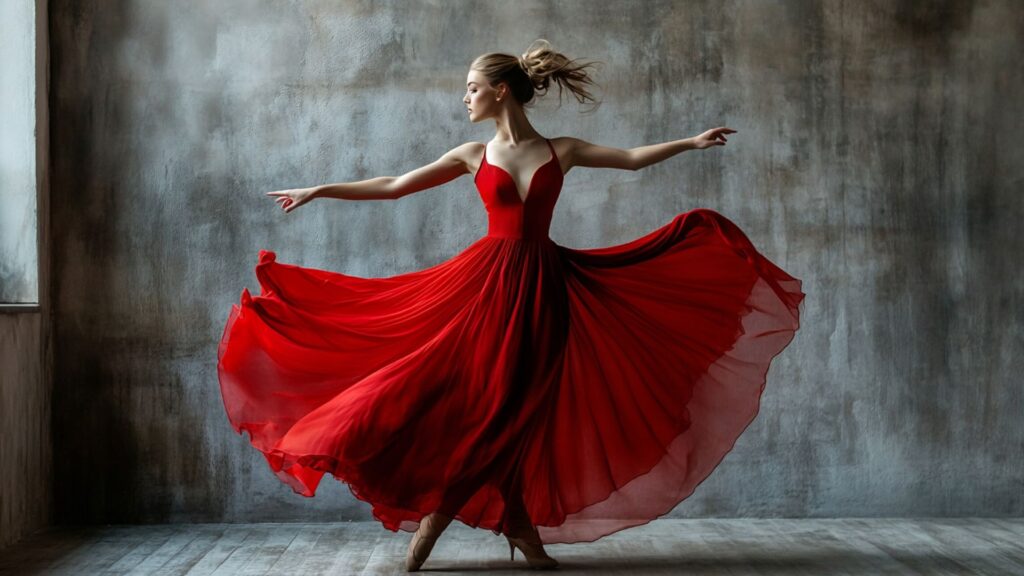
Your visual impact on stage depends heavily on your dance dress. Color and design grab the audience’s eye and tell your story.
When choosing your color, think about:
- Psychological punch. Bold colors like red scream energy and confidence, while darker shades like emerald or deep blue look elegant and slimming.
- Stage presence. Bright or neon tones like fuchsia create energy and make you impossible to miss.
- Emotional tone. Soft pastels like light blue or pink work perfectly for lyrical or contemporary pieces, giving off grace and feeling.
Your color should match your dance style. Classic tones usually work best for ballroom, while Latin or show routines call for bold, high-contrast colors that emphasize the beat.
Patterns and smart embellishments matter too. Delicate beadwork or lace inserts add a polished touch. Most embellishments are picked to enhance how you move:
- Rhinestones and crystals show up everywhere in dance competition dresses – they catch the lights and sparkle like crazy.
- Fringe and tassels are must-haves for Latin styles, emphasizing every hip shake and leg kick.
At the end of the day, your dress should show off your personality and how you interpret the choreography. A Latin number might need gold and red, while a lyrical routine could use soft blues and subtle details to create emotion.
Accessories and Final Touches for a Complete Look
Accessories are what pull everything together and max out your stage presence. The key is balance.
Here’s how to nail the finishing touches:
- Shoes are about function first – you need stability and flex for turns and footwork
- Match your shoe to your style – strappy sandals for Latin, elegant heels for Ballroom
- Coordinate your materials – pick accessories with similar stones or finishes to your dress
- For simpler outfits, a statement hairpiece can totally transform your whole look
- Jewelry should add to your lines, not mess with them – keep it tasteful
- Match your metals (silver or gold) to what’s already on your dress
- Skip heavy or chunky jewelry that could throw off your balance or snag your costume
The complete package shows who you are and creates a moment people won’t forget. This kind of attention to detail is what brands like Songs of Siren are all about. Their women’s dance dresses, like the vibrant Dancer Dress with its gold-to-red ombré beading, celebrate Latin rhythm and bold glamour. Meanwhile, the elegant Midnight Sky Gown, in deep navy with scattered silver stars, brings pure grace to the ballroom. Start your dance journey with style!